Software
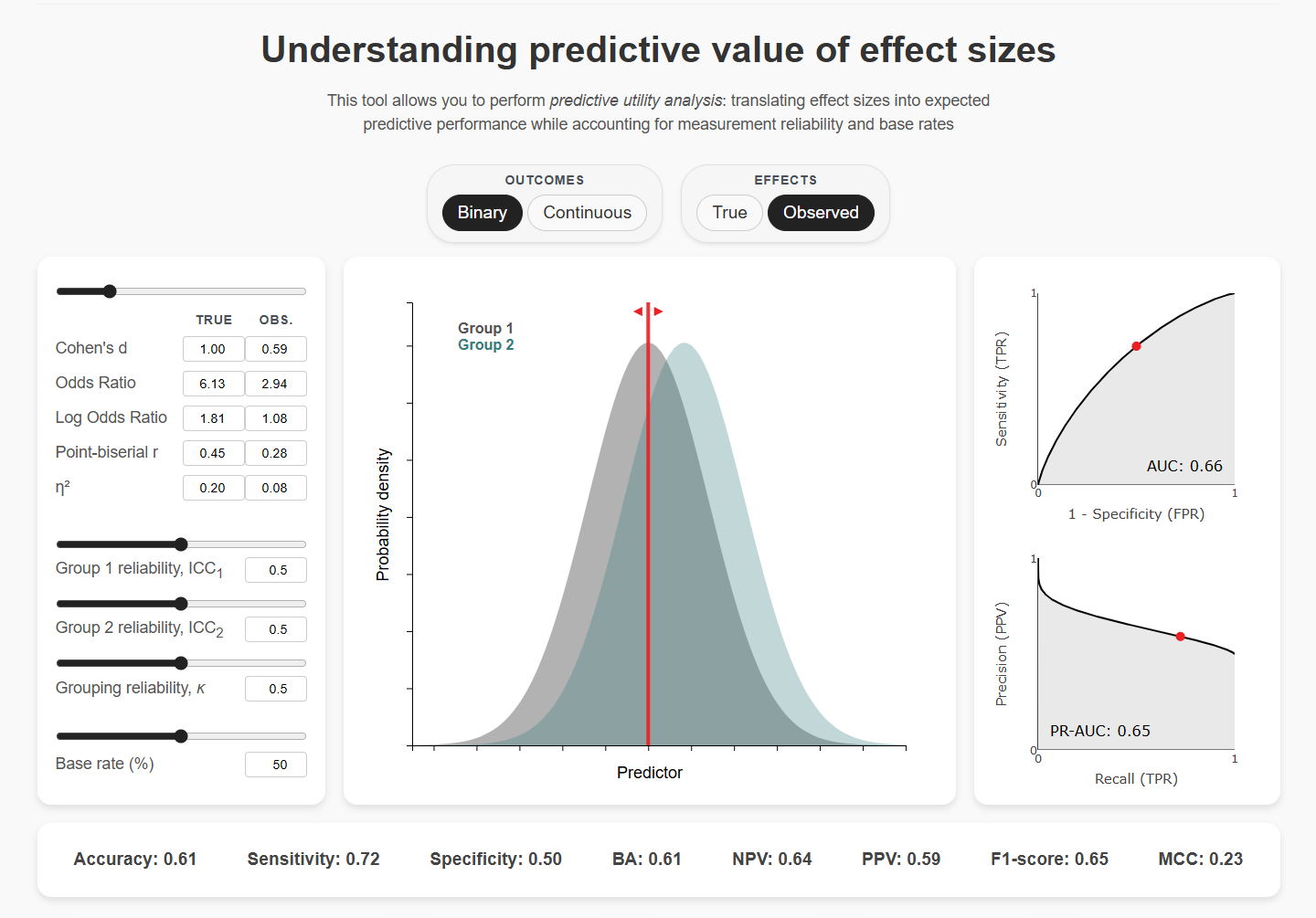
E2P Simulator
E2P Simulator (Effect-to-Prediction Simulator) is an open-source web tool for evaluating real-world utility of biomarkers and prediction models (Karvelis et al., 2025). I built it to address critical gaps in research practices and to place measurement reliability and outcome base rates at the center of the interpretation of findings and research planning.
E2P Simulator allows researchers to explore the relationships among effect size (Cohen’s d, Pearson’s r, Odds Ratios), discriminative ability (ROC-AUC, sensitivity, specificity), real-world predictive value (PPV, NPV, PR-AUC), and clinical utility measures (Net Benefit), while visually conveying how all of them relate to the same underlying data distribution. It also includes multivariable simulators to estimate performance when combining multiple predictors, sample size calculators for training multivariable models, and a module for exploring how changes in measurement reliability and outcome base rates affect model calibration.
Similar to how power analysis tools (such as G*Power) help researchers plan for statistical significance, E2P Simulator helps plan for practical significance. This enables more informed research decisions and efficient resource allocation in precision medicine, psychiatry, and other fields focused on predictive modeling and personalization.
For its application in precision psychiatry see Karvelis et al., 2026 (preprint).
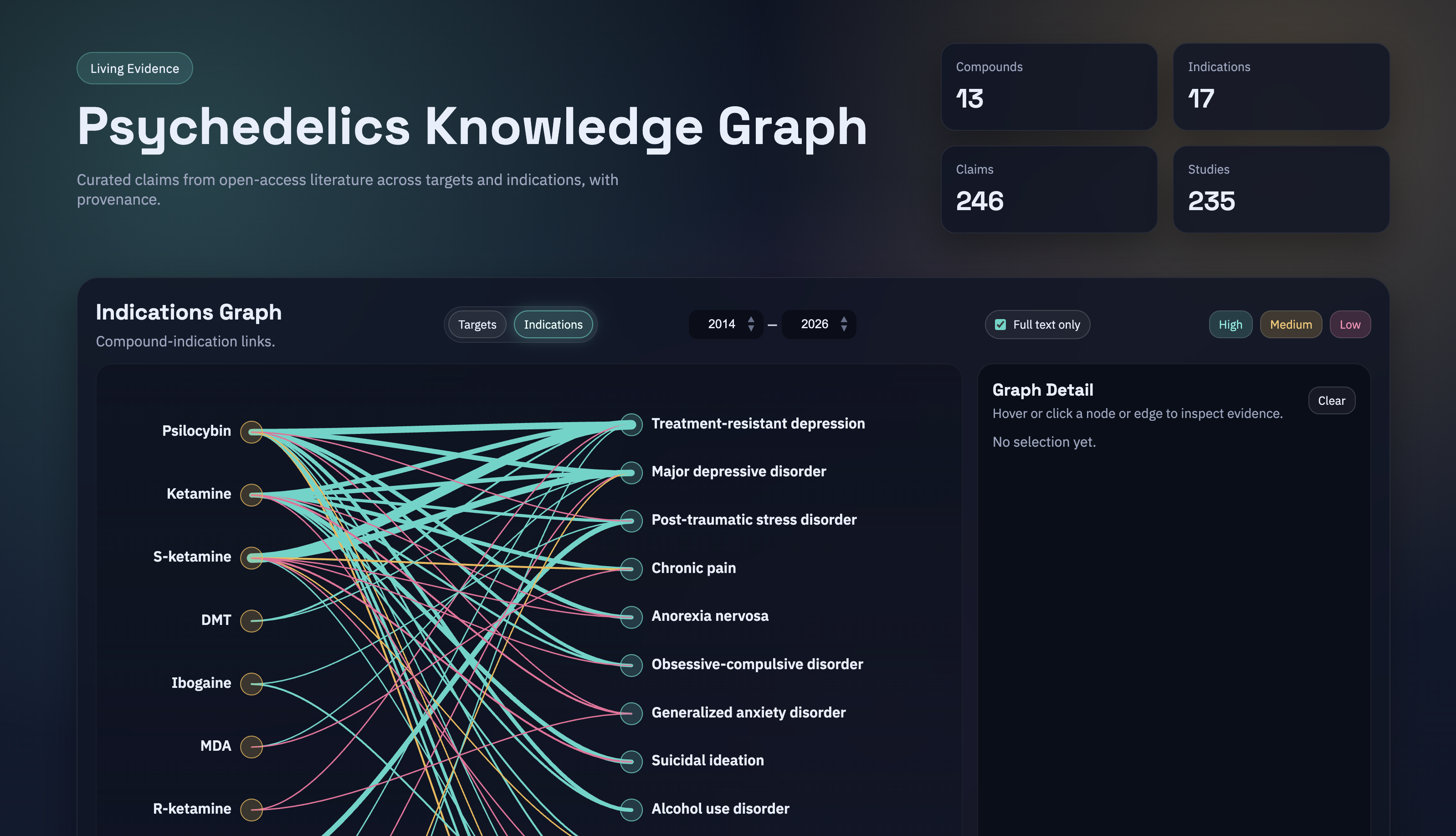
Psychedelics Knowledge Graph
Knowledge graphs are a convenient way to structure information, especially for agentic science. I have been developing an automated pipeline that retrieves relevant literature, curates it, extracts claims, and builds a knowledge graph from those claims. I picked psychedelics as a starting point because it provides a manageable scope.
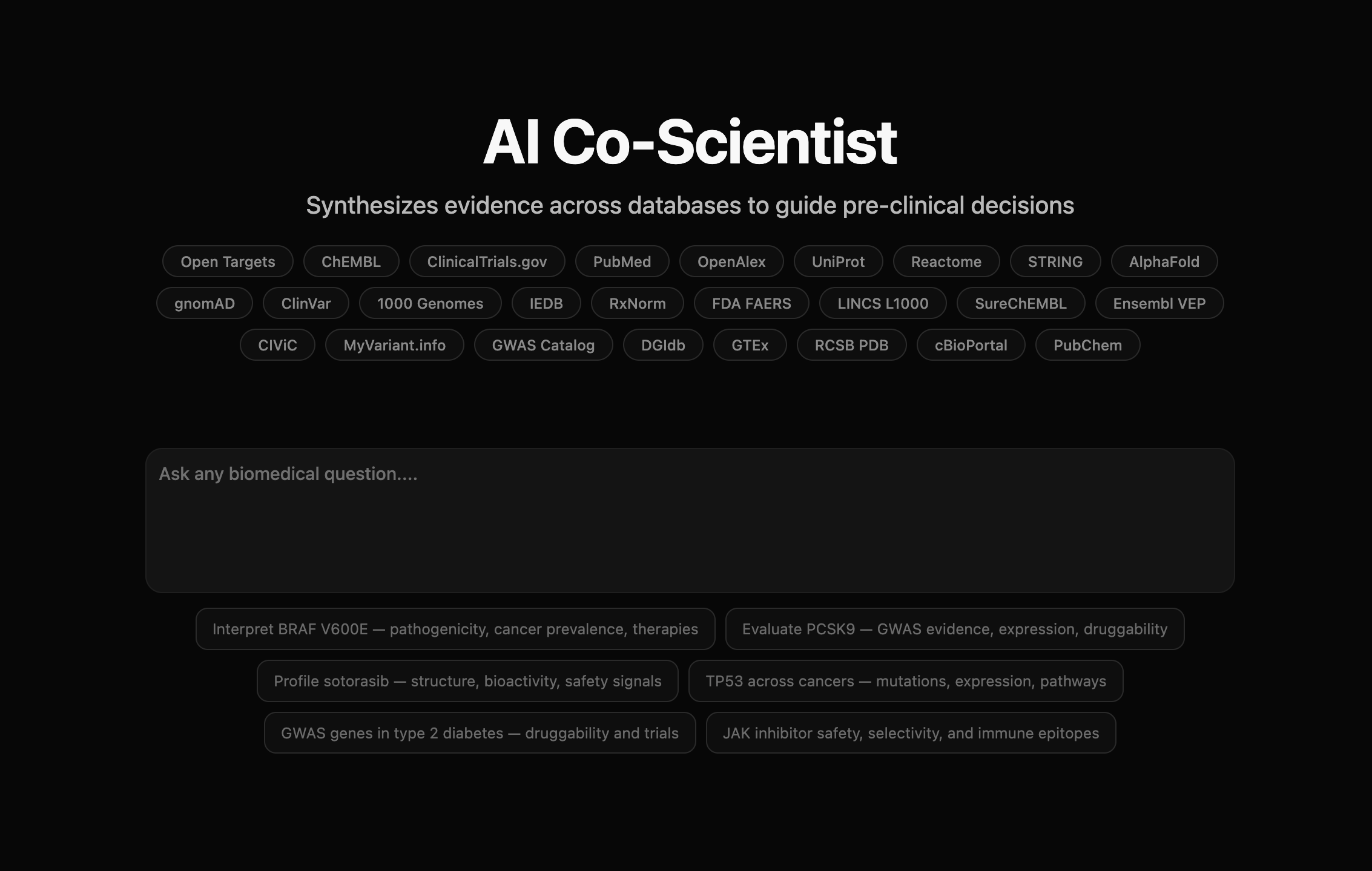
AI Co-Scientist
An AI co-scientist that can answer complex biomedical questions by querying and synthesizing existing evidence across 50+ databases, such as Open Targets, ChEMBL, ClinicalTrials.gov, PubMed, UniProt, AlphaFold, and EBRAINS. It uses Google’s Agent Development Kit to orchestrate the workflow and is powered by Gemini.
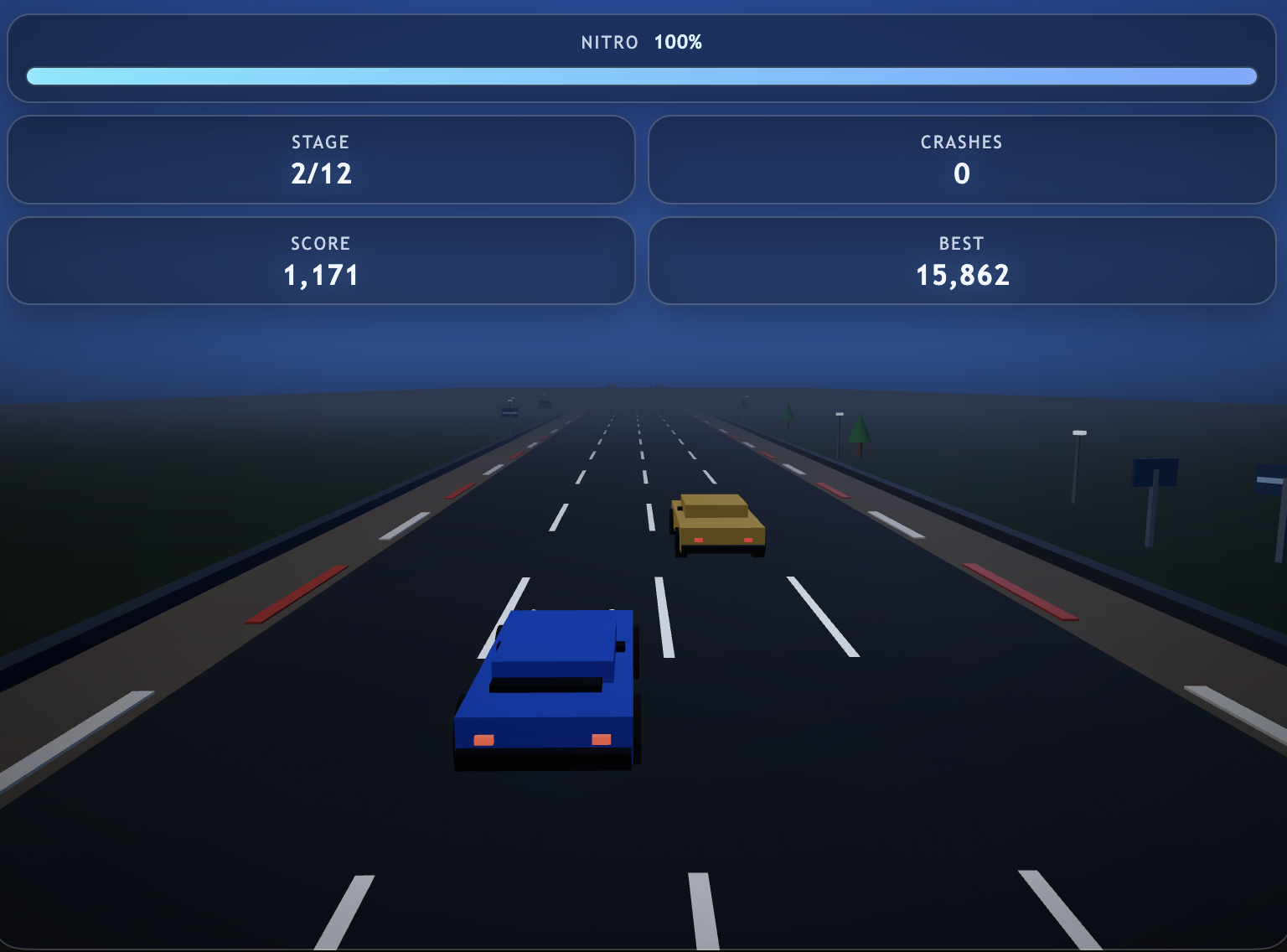
Hyperlane Blitz
A fun weekend project exploring rapid game prototyping with Codex. The game is designed for studying individual differences in associative learning and probabilistic inference (cars of different colors follow different movement patterns and probabilities). In other words, it’s a serious game.